Maryte Collard – Time #6
Discovery of Penicillin
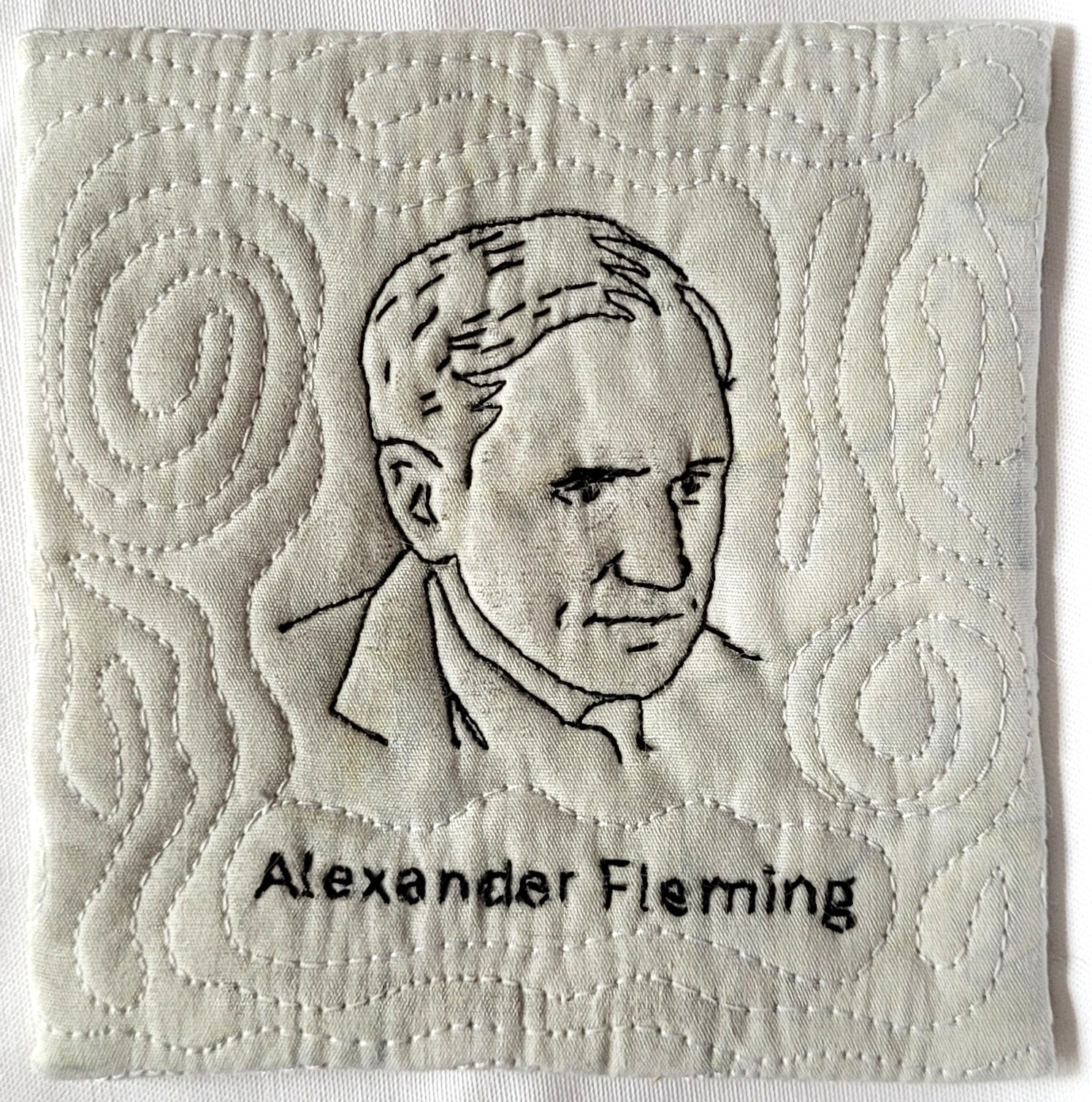
Before going on vacation in September 1928, bacteriologist Alexander Fleming left a stack of petri dishes containing Staphylococcus bacteria on his bench at St. Mary’s Hospital. Returning on September 28th, Fleming noticed one uncovered dish had been contaminated with a fuzzy blue-green mold (Penicillium notatum). Miraculously, the bacteria colonies surrounding the mold had dissolved, creating a clear “halo” where the bacteria were dead.
Fleming realized the mold was secreting a natural defense chemical—which he named “penicillin”—that killed bacteria. However, he struggled to purify or extract it in large enough quantities to be useful as a medicine.
Over a decade later in 1940, researchers Howard Florey, Ernst Chain, and Norman Heatley at Oxford University picked up Fleming’s research.
Growing the fragile mold required massive surface areas. And the mass production hit a wall until the research shifted to the U.S. Department of Agriculture (USDA) lab in Peoria, Illinois.
A lab assistant named Mary Hunt—affectionately dubbed “Moldy Mary”—scoured local fruit markets and brought back a moldy, gold-furred cantaloupe she found rolling around in a Peoria market. The strain from that market cantaloupe (Penicillium chrysogenum) produced hundreds of times more penicillin than Fleming’s original sample.
Penicillin heralded the dawn of the antibiotic age and many more antibiotics followed. But penicillin remains one of the most important of them.To date, penicillin has saved an estimated 200 million lives worldwide, and halted countless numbers of painful, disfiguring ailments. It’s no exaggeration to call it the most important drug in history. And it all started with a moldy cantaloupe, and a woman who wouldn’t take no for an answer.
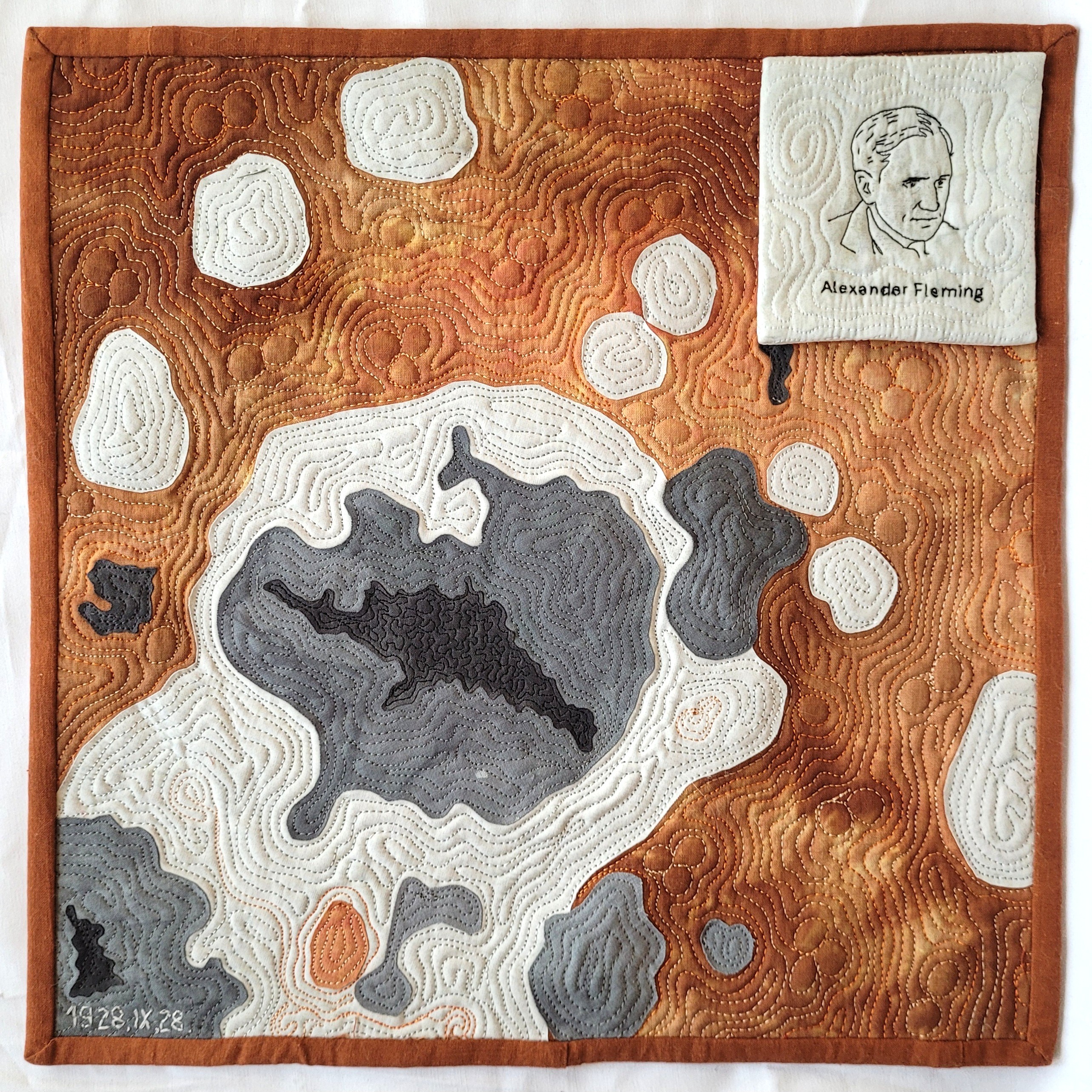
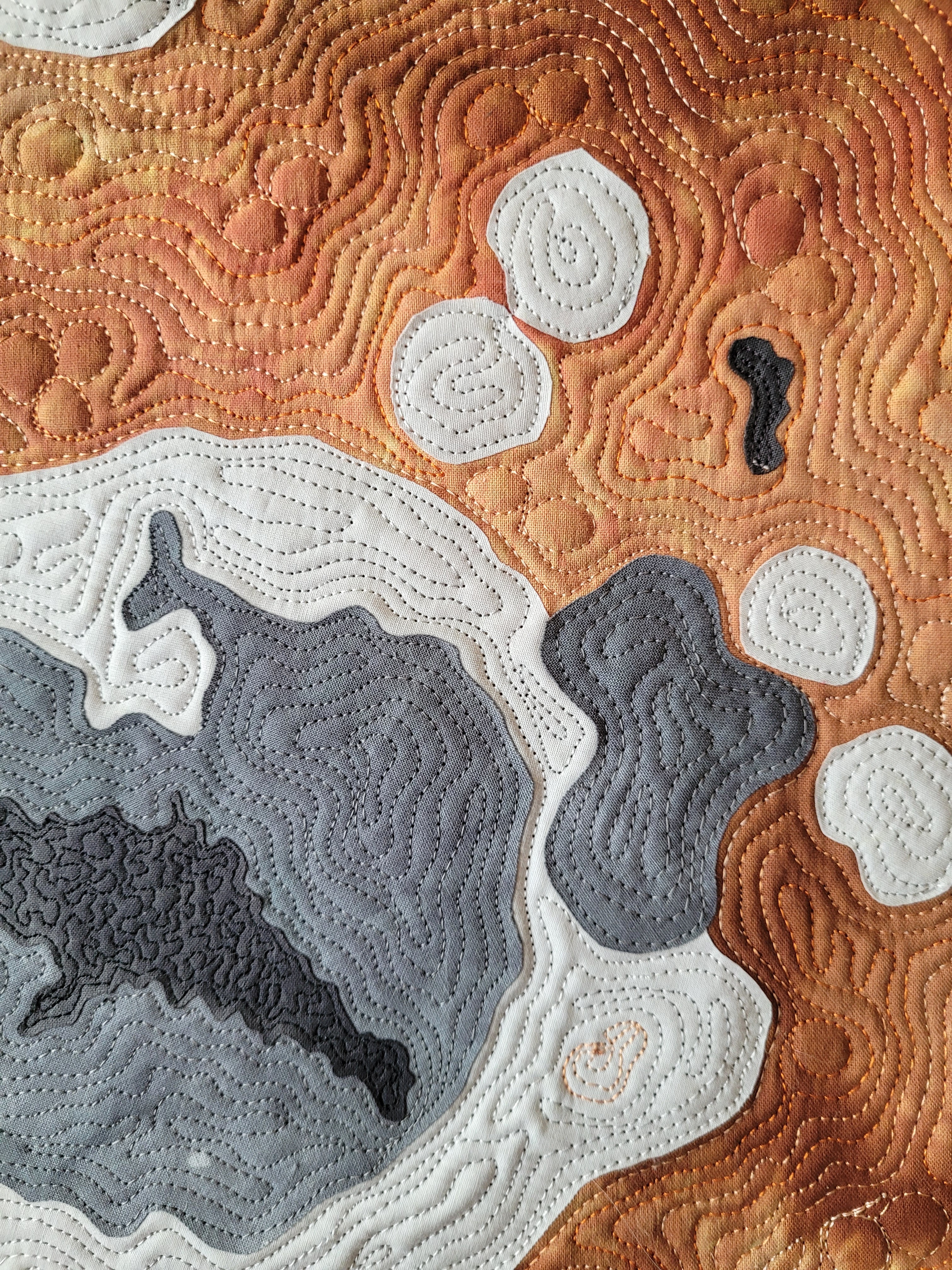
In my quilt I followed in steps of Moldy Mary and made an image of Penicillium chrysogenum on an orange skin.
I used my own hand-dyed and commercial cotton fabrics and fused applique technique.
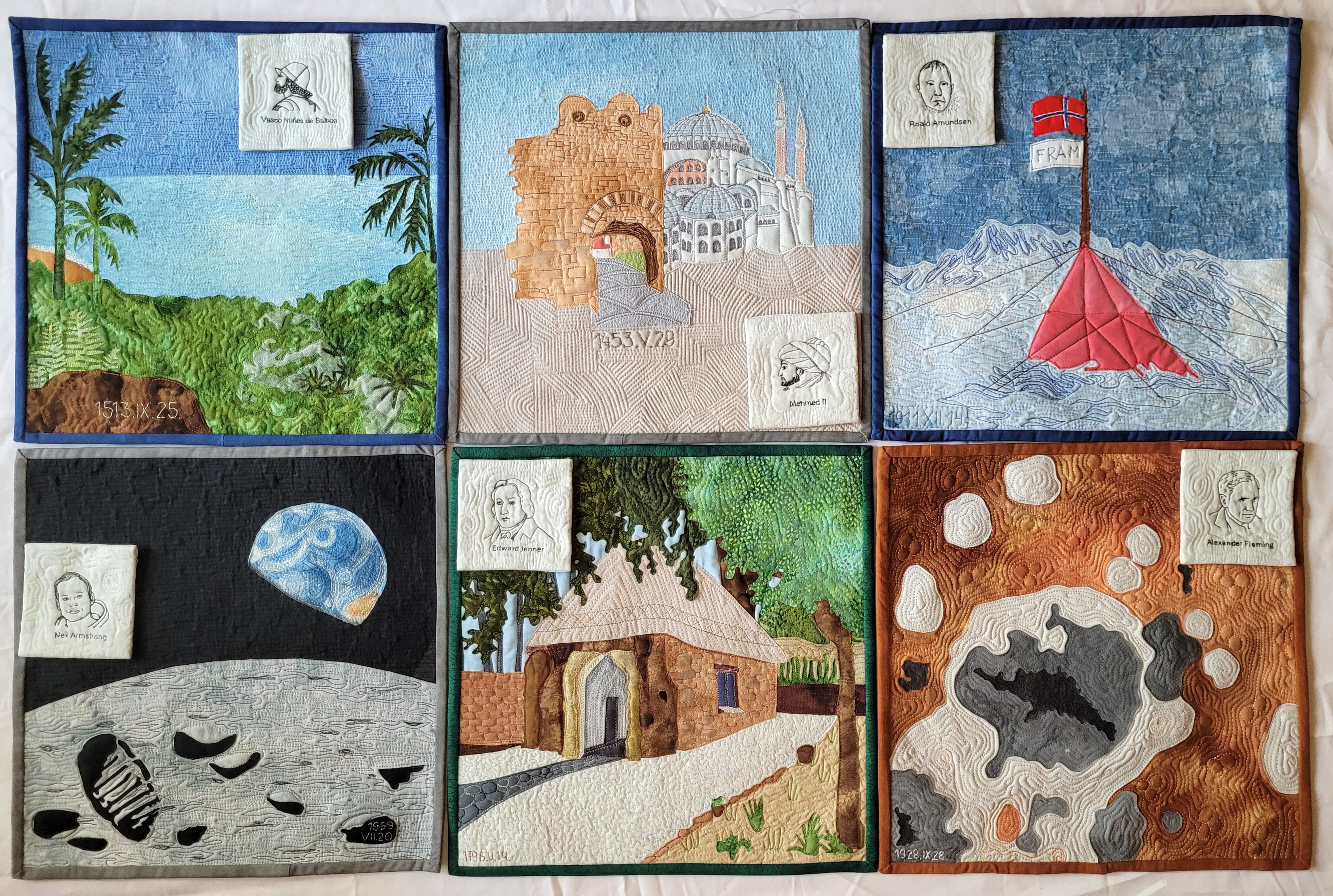
And here there is my entire series of Time:


Beautifully designed and quilted. I think that i would have preferred the image of Alexander Fleming embroidered on the background in black or grey. Cheers