Maryte Collard – Time #5
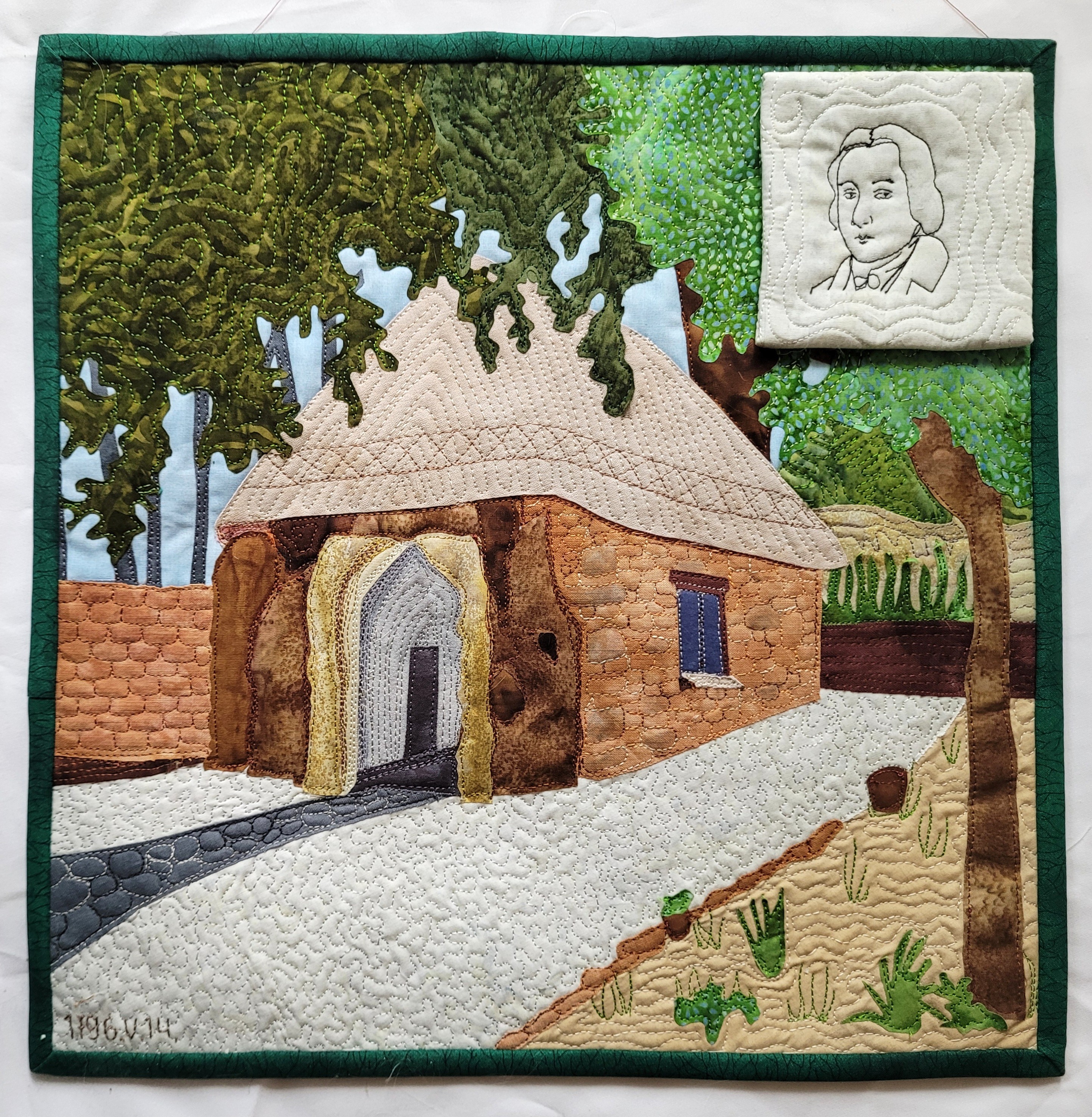
Temple of Vaccinia
Following the idea of pivotal moments in time that transformed humanity, I am dedicating my last two “Time” quilts to medical achievements that saved millions of lives.
Among these breakthroughs, vaccines stand out as one of the most transformative achievements in history, containing infectious diseases that once decimated entire populations. Though the concept of immunization predates modern science—originating from the ancient practice of variolation across several cultures—the true turning point occurred in 1796 with Edward Jenner.
Jenner observed that milkmaids exposed to cowpox appeared immune to smallpox. Hypothesizing that cowpox could offer protection, he tested his theory on May 14, 1796, by inoculating eight-year-old James Phipps with cowpox material from a milkmaid’s lesion. When subsequently exposed to smallpox, Phipps showed no signs of illness.
This discovery had profound implications for public health. By proving that controlled exposure to a pathogen could safely stimulate immunity, Jenner laid the foundation for modern immunology. Building on his work throughout the 19th and 20th centuries, scientists developed vaccines for rabies, anthrax, polio, diphtheria, tetanus, and pertussis. Mortality rates plummeted, dramatically demonstrating the power of preventive medicine.
Jenner carried out much of this life-saving work at his home, Chantry House, in Gloucestershire. In his garden, he built a small one-room hut he called the “Temple of Vaccinia,” where he vaccinated local poor residents free of charge. Today, the property serves as the Edward Jenner Museum, and the historic hut still stands—inspiring this quilt, which depicts the hut as it appears today.
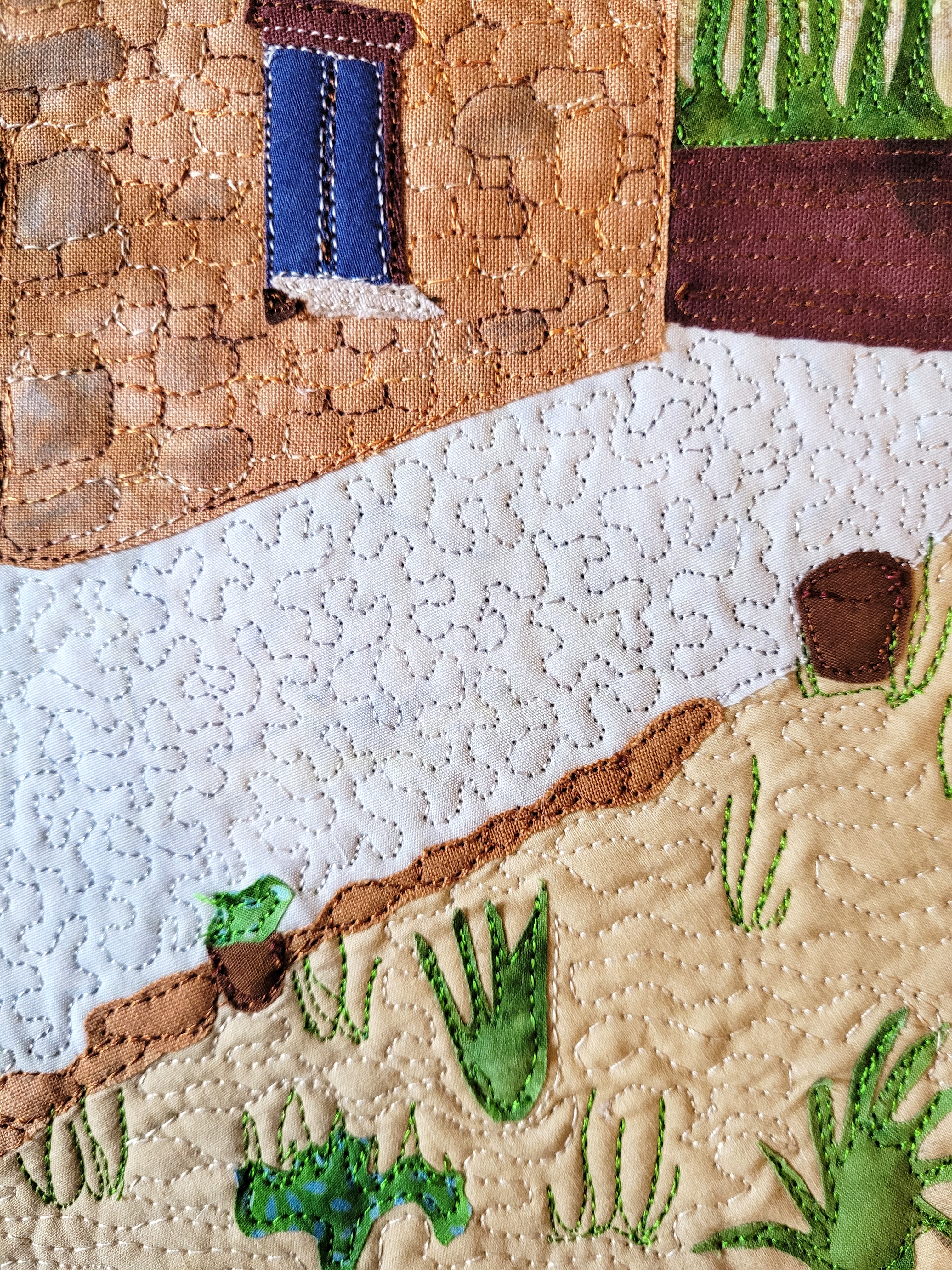
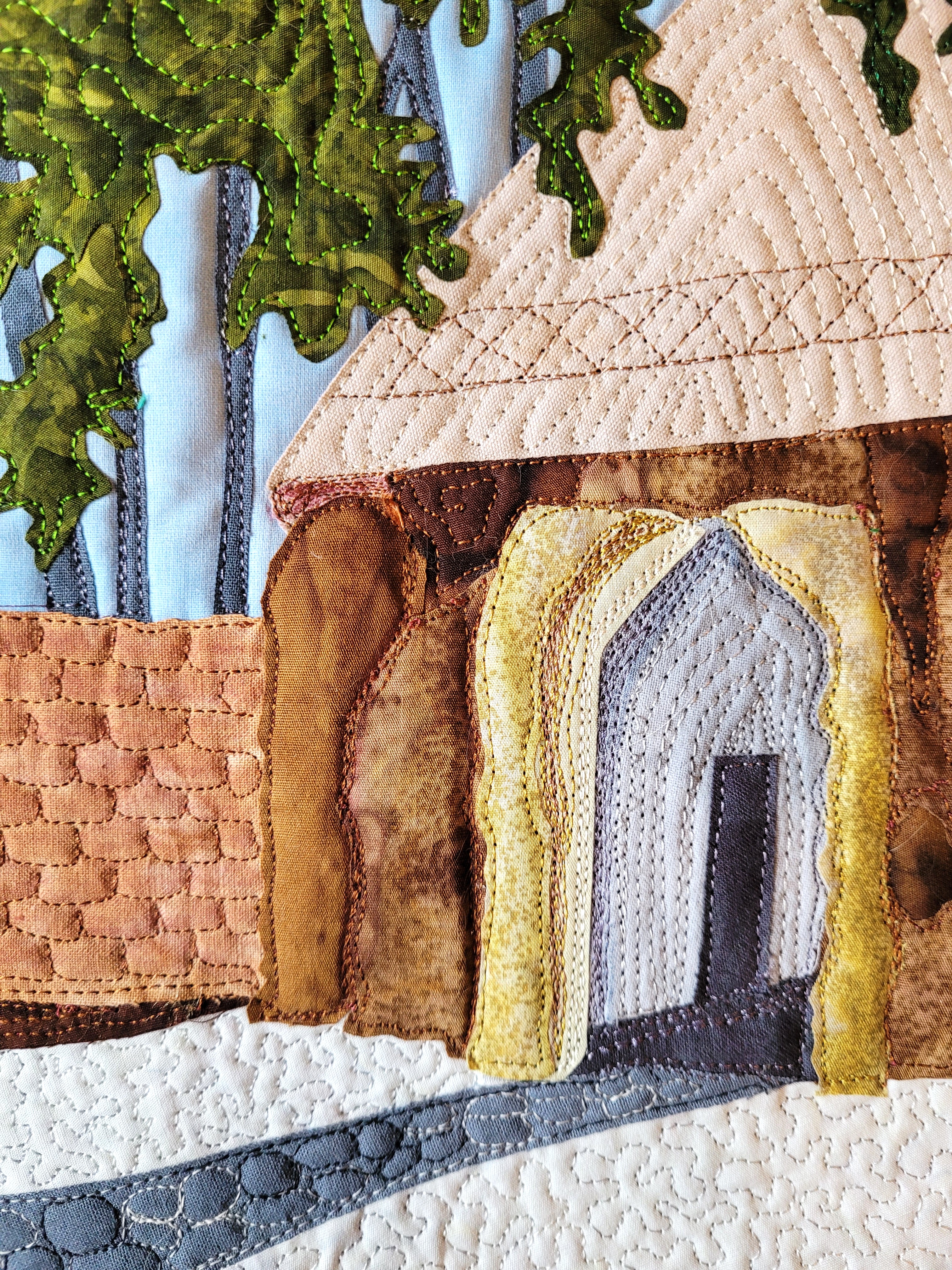
Technique and materials: fussed applique, machine quilting, commercial cotton fabrics, polyester batting.


What an interesting story, I have to say that I was unaware of it. Great fabric choices and stitching which together give real depth to the piece. Lovely work.
I think this is a great choice of theme for the final pieces in your series.
A truly interesting backstory. Vaccines are a revolutionary invention that has saved many lives.
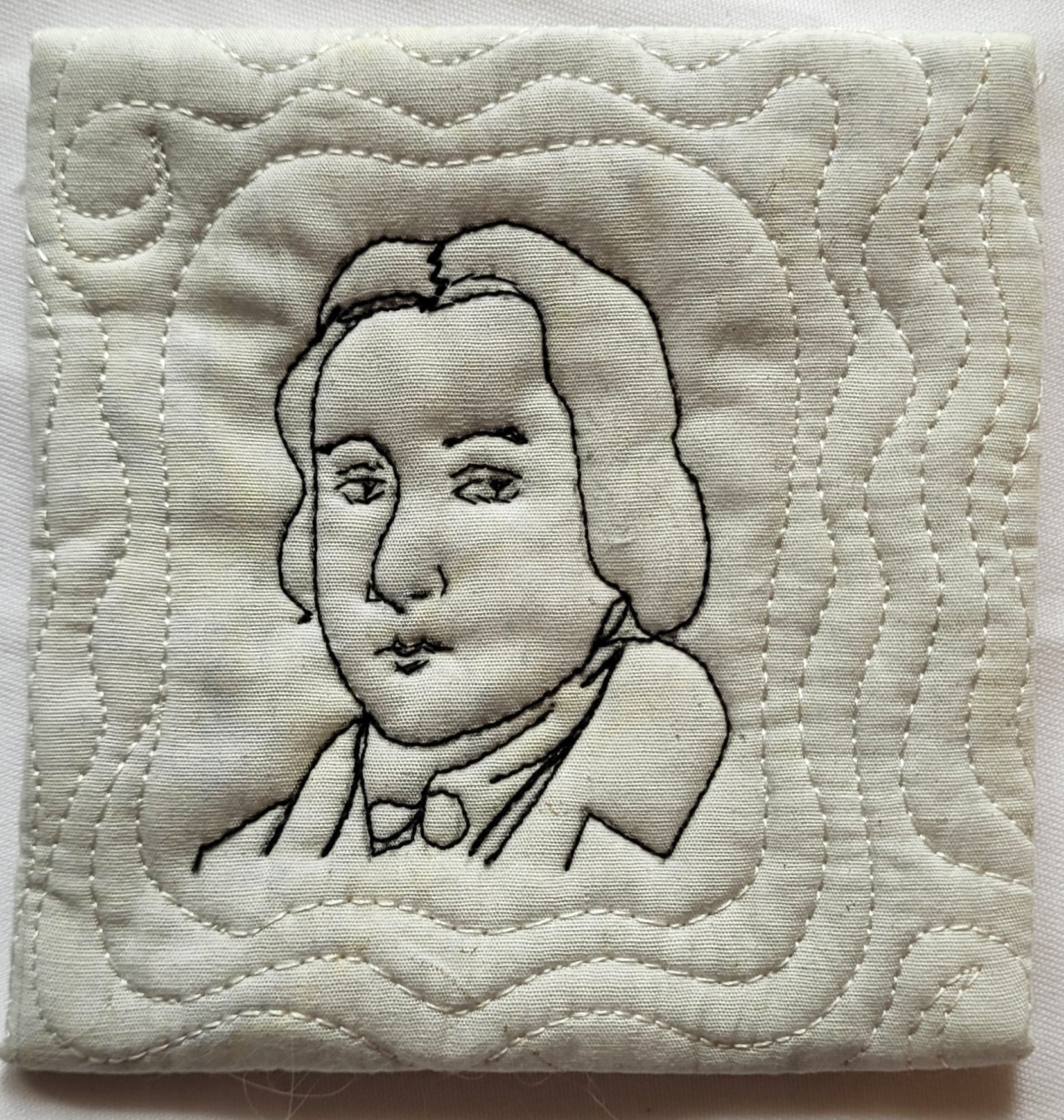
Excellently executed work. And as always, the small portrait is a nice detail that ties all the parts of the series together beautifully.
As you say, this story is one of the great moments in time. You have depicted the hut and the surrounding garden beautifully and I’m really enjoying the way that you are adding the little portraits in your series. Great work
You created a lot of depth in your piece. Good composition and great attention to details. Your quilting is excellent as usual.
Fascinating back story, and a monumental achievement. Would be so nice to visit that museum dedicated to this great scientist. A lovely quilt and the small portrait is excellent again, tying this quilt to all previous ones. Well done!
Jenner has always been one of my scientific heroes so
I really appreciate this tribute to his work for humanity. Well done.
WOW, this quilt is so well designed and your piecing of the building is a masterclass in transforming fabrics. bravo
The composition and choice of fabrics for this piece are perfect ! Adding a little portrait on each piece is a good idea, it will be the link between the pieces.
I like how the little hut seems to be in full light.
A very interesting story and an important part of medical history.Your stitching adds visual interest as does the choice of colors.