Helen Hazon – Time #5
Wholecloth quilts
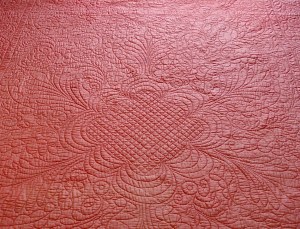
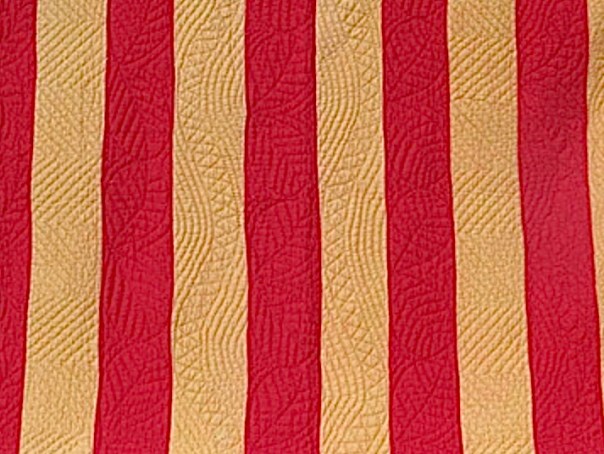
In pure wholecloth quilts the complete design was stitched onto a single piece of fabric. There was no piecing or applique at all. Most fabrics used were cotton and all stitching was done by hand, either by an individual quilter or by a group working together on a community project. There was a variation of this type of quilt called a “strippy” because the quilt top was assembled from long strips of fabric then each strip was (usually) quilted separately.
Historically wholecloth and strippy quilts are mainly associated with the years between the 2 world wars and the former coal mining areas of South Wales and NE England, mostly County Durham. The women in these places added to their family incomes by making quilts in their homes when their daily chores were finished, often selling them locally or to buyers from other areas. The quilts made in these 2 main areas show distinct styles of quilting patterns and it is possible to use these patterns to decide whether an antique quilt is Welsh or North Country/Durham in origin.
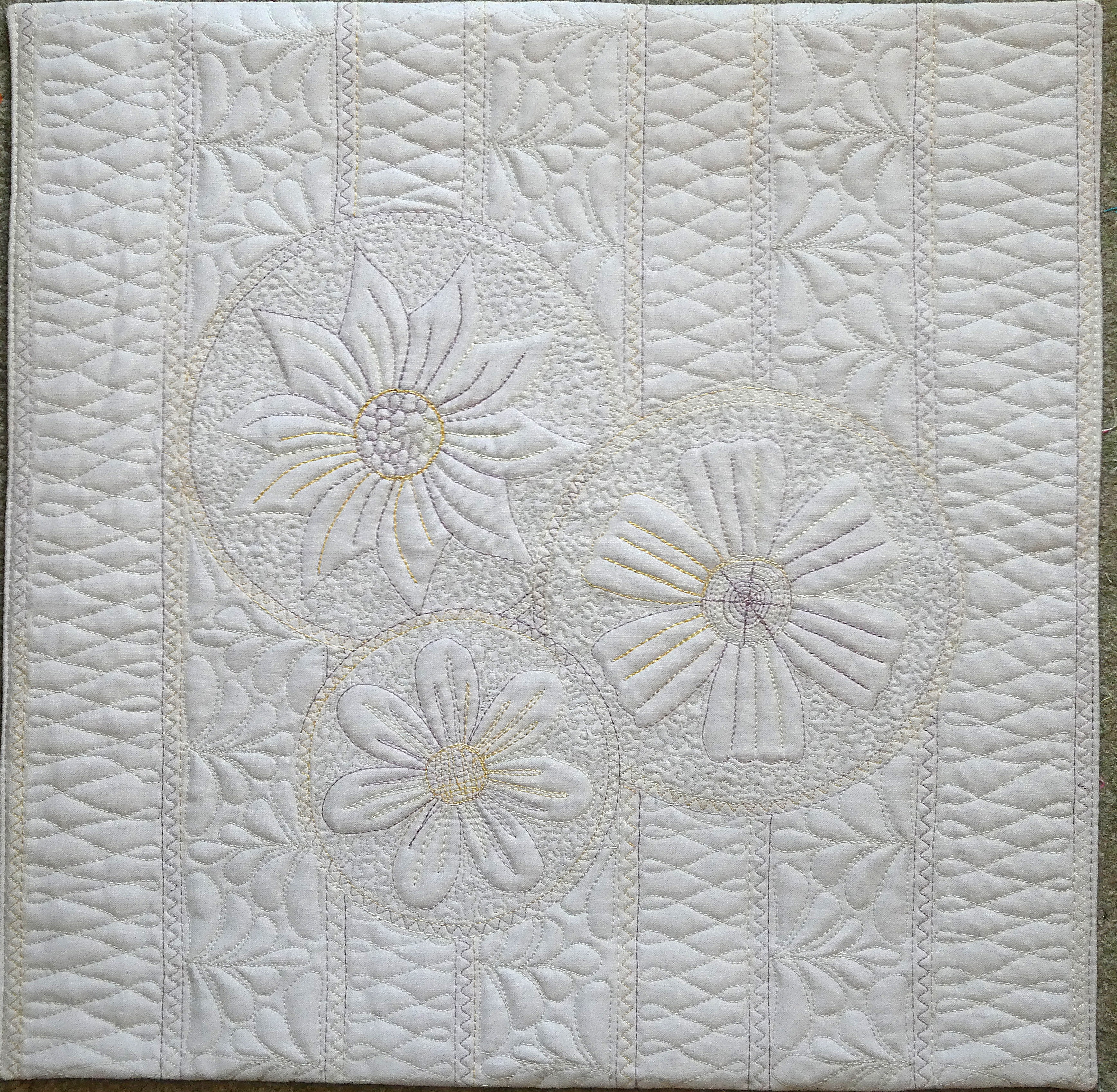
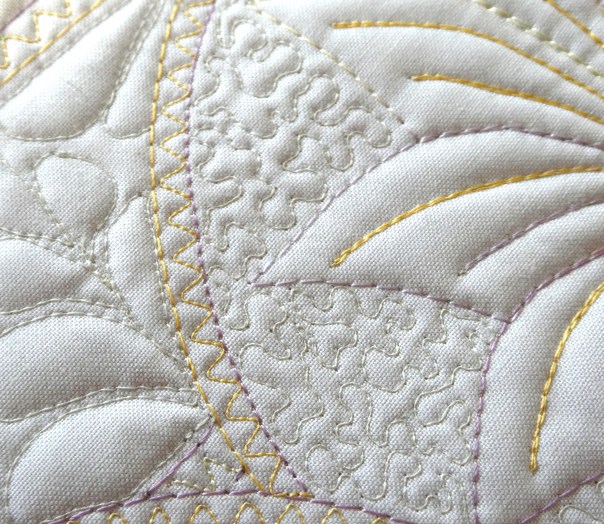
My husband comes from a North Country family, sadly not quilters, so I chose to base my design on the style of patterns used in Durham quilts – flowers, curves, fans and feathers. I also included a strippy effect in the background quilting although the fabric is a wholecloth and not pieced. All fabrics are cotton; quilting threads are acrylic.
Screenshot
Detail view:


Beautifuly stitched quilt. It made me realize for the first time that the quilting patterns as well as fabrics(I already knew that) may help to date the quilt. I have to say that your stitching is always extraordinary.
I really admire the work which goes into whole cloth quilts and you have demonstrated this beautifully.
I come from Durham myself so I appreciate this form of quilting, but although I was brought up in a stitching household, none of the family were quilters. You have made a lovely job of depicting this type of quilt and as always your stitching is beautiful
I really love your piece. So much handwork—and so much history in every stitch. Truly beautifully executed work.
I am in love with this piece!!! It is so well done how you made a combination of this two types of quilts. Your stitching is excellent as always and I like how you added a bit of colour.
I am in love with vintage Durham quilts. In a workshop some years ago we took them apart and reused those well worn and loved (many layers of) fabrics. Expertly executed quilting! Especially nice that you combined the strippy and whole cloth designs in one quilt.
Outstanding, I am in awe of your quilting. Bravo
Your quilting is perfect ! Ilike how you integrate the stripes into the wholecloth quilt. The light toucgh of colour is lovely.
Such a lovely story behind your quilt. The shapes are perfect and the addition of a touch of deep yellow is inspiring.