Maryte Collard – Time #3
Discovery of the South Pole
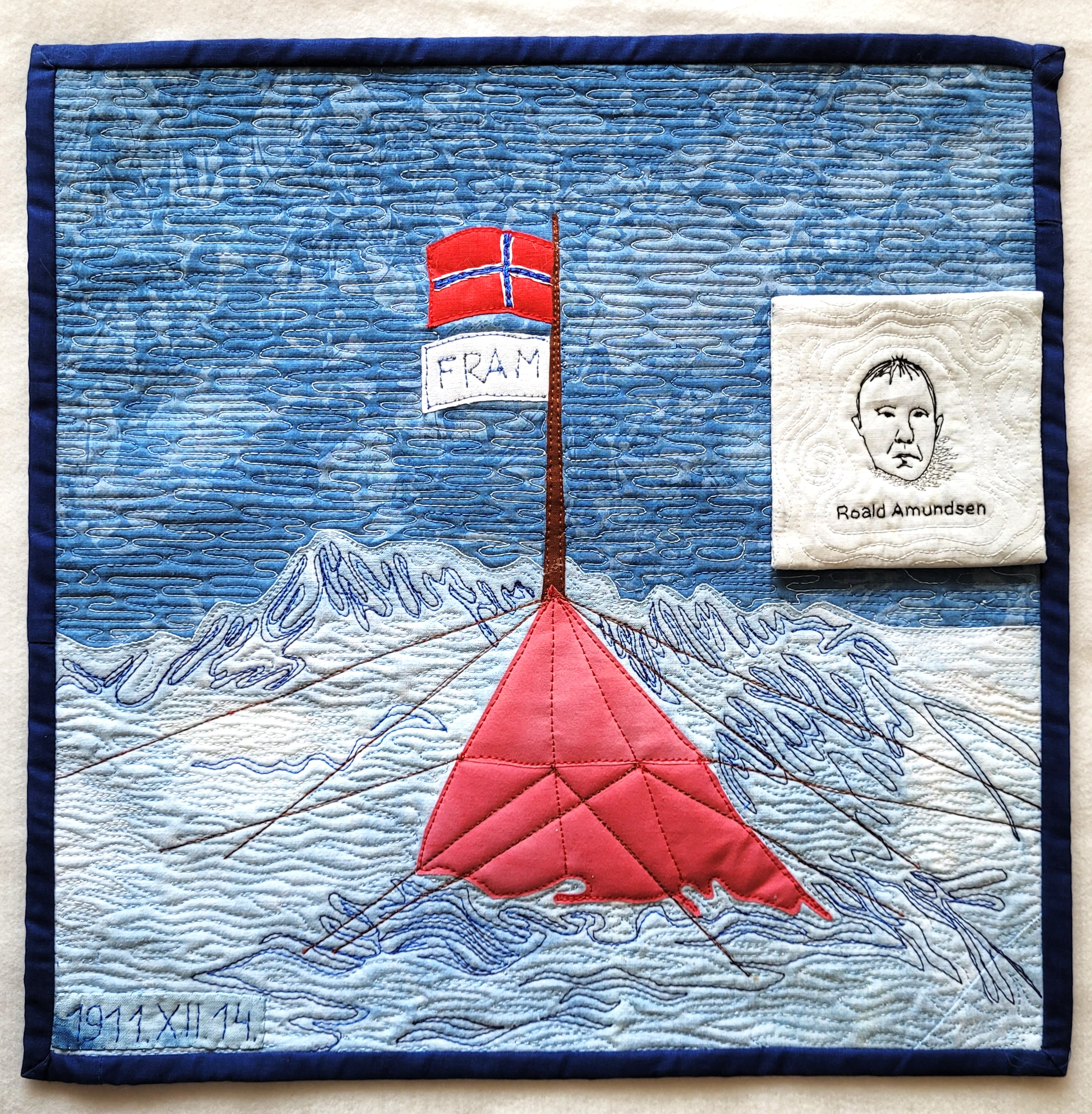
The Norwegian explorer Roald Amundsen and his team of 4 more men reached the South Pole on December 14th, 1911. They built a small tent marking the South Pole. Above the tent flew a Norwegian flag and a flag of Amundsen’s ship called FRAM. They also left a letter stating their accomplishment, in case they did not return safely to Norway. When the British explorer R.F. Scot and his team reached the Pole on January 17th, 1912, they found the tent left in place by Amundsen. They were disappointed but acknowledged Amundsen’s discovery.
The tent has never been removed but now it is deeply underneath the snow that collected through the years (snow never melts at the Pole) and moved away from the actual South Pole. The ice that covers Antarctica is slowly moving, and the geographic marker must be moved several meters each year. Where is the tent now it is not known but it is till there, under the ice.
The discovery of the South Pole was crucial for completing global geographical exploration, but its lasting importance lies in scientific research. It acts as a unique, undisturbed laboratory for climate change, astronomy, and geology, offering insights into Earth’s history, atmospheric health, and the origins of the universe
In my first version of this quilt, I had figures of 4 men standing in front of the tent but decided to remove them. The men are gone, the tent is still there.
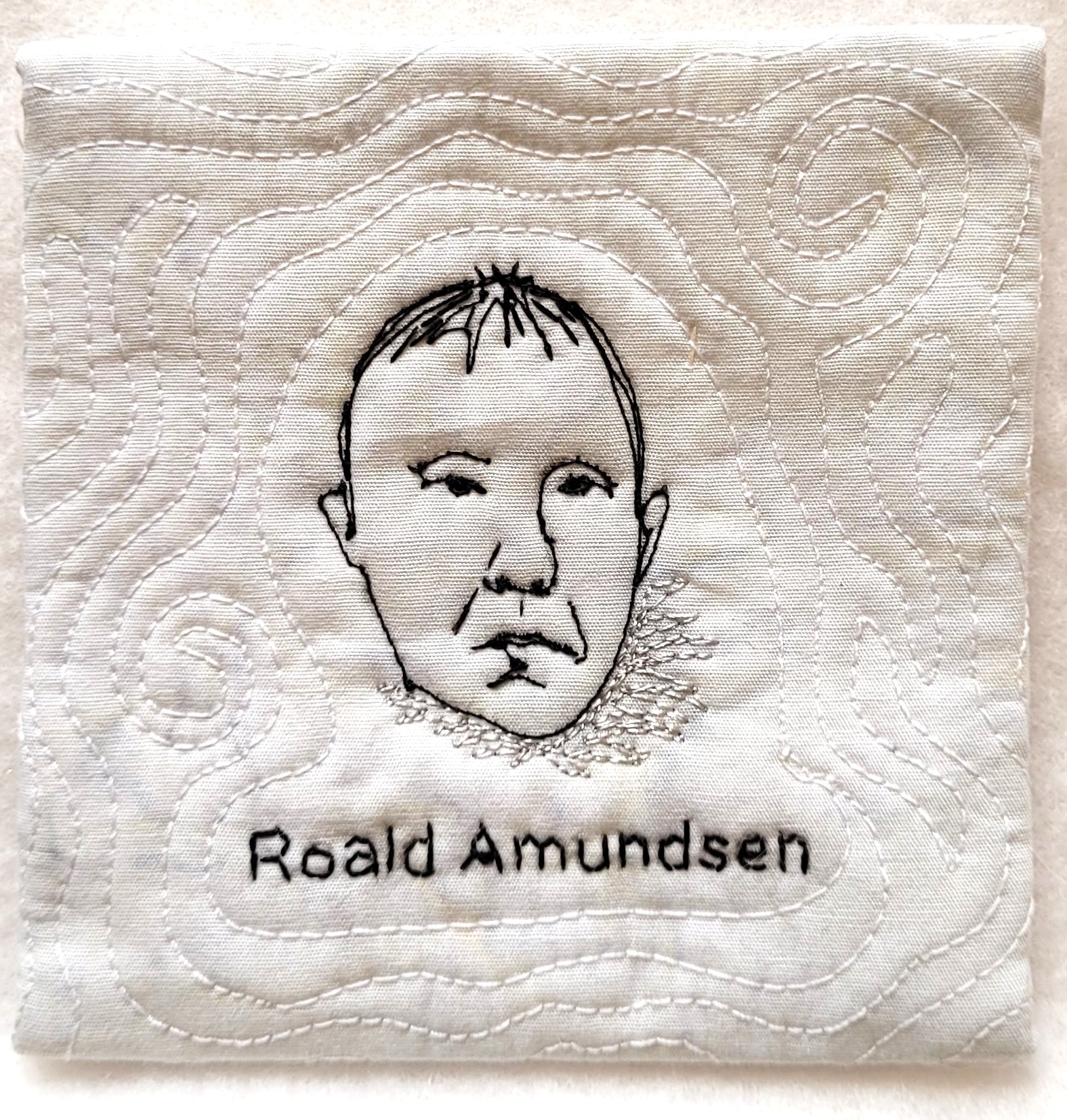
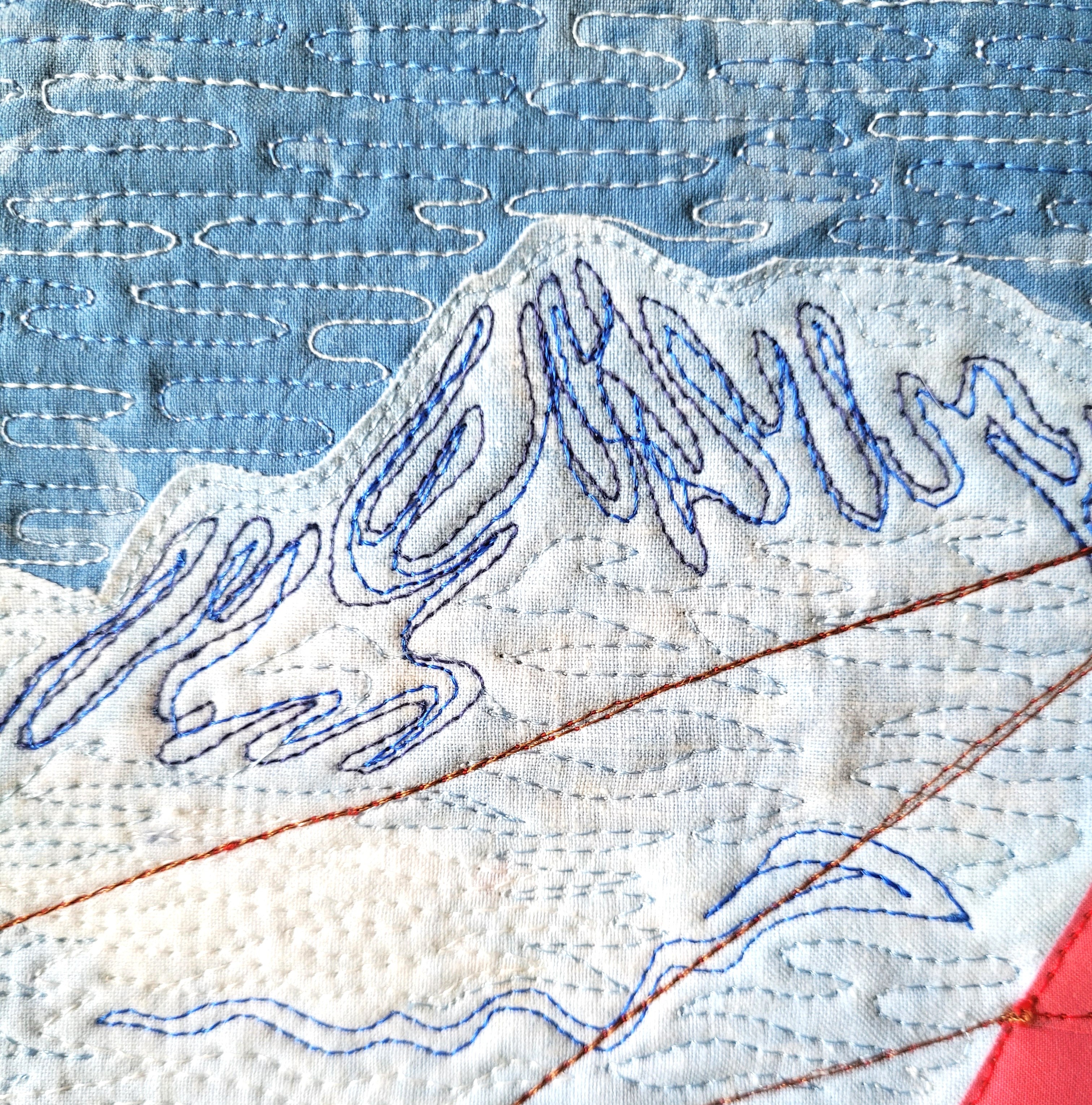
I used my own hand-dyed fabrics and fused applique technique. Machine quilted with some hand embroidery. The portrait of Roald Amundsen attached.


The economy of colors and the simple shapes make this piece very strong Maryte ! The movement in your quilting shows so well the layers of ice/snow. Well done !
A sad story. The minimalistic approach and colours convey the isolation and geography of the Antarctica.
I had to blink a couple of times – is that the Norwegian flag I see? And indeed it is.
Despite the Norwegian success, I have always had great sympathy for Scott. How crushing it must have been to get there “too late”. Even more tragic is that he and his group died on the way back from this expedition.
You have captured the Antarctic cold and icy environment very well.
I really like these little portraits, they tie the pieces in the series together very nicely.
Beautifully done work.
Minimalist work that says a lot. The use of only three colors and the wonderful stitching create perfect harmony.
The colour palette is perfect for the clean open spaces of the South Pole, and the deep cold there. I love the idea that the tent is still in place though time may have covered it in ice and snow. Your stitching is beautiful and gives life and interest to a beautiful design
The starkness of the piece creates the emptiness and cold of the South Pole. Soul destroying for Scott but a triumph for Amundsen, who knows where the tent will finally appear! Great choice of fabrics and lovely stitching, an interesting piece, well done.
As others have said, the colours and minimal design create a strong feeling of cold and emptiness. A great illustration of a significant discovery.
Leaving only the tent underscores your theme. With your choice of colors you created a cold, vast and lonely landscape. Well done.
There is such a chill in this simple but powerful piece. The blue stitching against the white ice emphasizes the shadows perfectly. The repetition of the portraits ties your series together beautifully.
The minimalist use of color beautifully portrays the south pole and your stitching is spot-on.
What a strong piece! The limited color palette is beautiful, love that blue stitching and the red tent. You have created a very lonely and forlorn landscape. The small portraits are great and will tie all your works together.
I love the colors you used; can almost feel the cold. The stitching is spot-on!
Beautiful quilt. The hues in the white of the ice are perfect, it really reflects the immensity and desolate landscape of the South Pole. Fantastic quilting, great attention to details. It is also a great story.
Great story, truly a milestone for our history. And exquisite quilting, as usual!