May Challenge – Nature
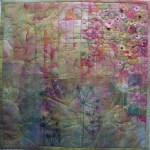
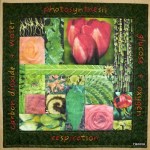
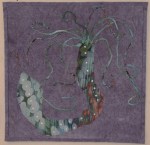
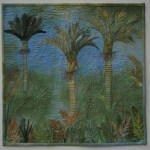
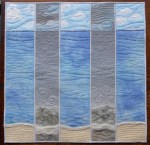
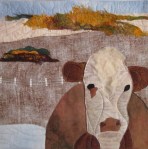
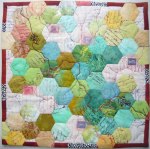
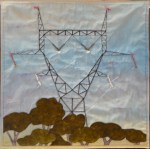
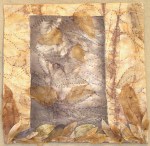
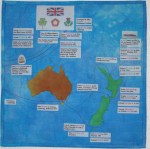
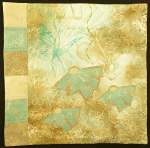
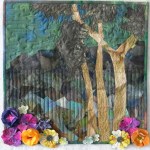
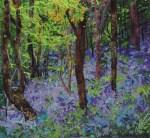
Our third challenge for 2014 is “Nature”, members have interpreted this theme in a variety of ways, from rural scenes to the raw beauty of nature in the city, flowers and natural landscapes, the sea are also featured. To read more about the Artists quilts click on the thumbnail and you will be directed to the Artists’ statements.










Challenge – Contrast
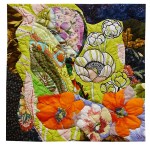
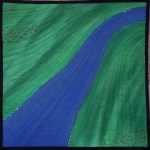
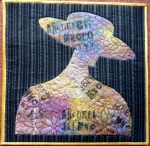
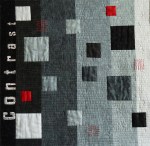
“Contrast” was the theme for February/March challenge. members drew their inspiration from a variety of sources, nature, what they have seen on daily walks, the colours around them, landscapes, and paintings. I just know you will be surprised by the ingenuity of the members in their interpretations, and a surprise is behind one quilt.
To read the artists statements click on the thumbnail of the photograph. Members appreciate your comments so please leave one for them to read.




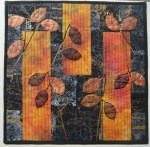
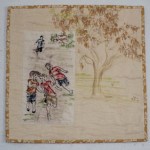

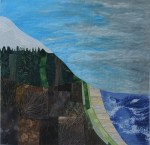

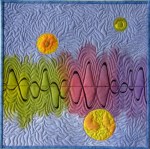
Challenge – Rhythm
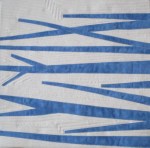
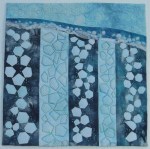
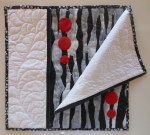
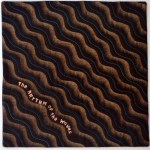
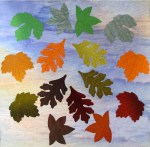
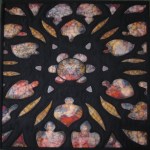
This was a demanding theme as there are so many ways to interpret the word “Rhythm”.
Rhythm is a principle of art that’s difficult to summarize in words. Assuming that you’ve picked up on a rhythm in music before, take what you heard with your ears and try to translate that to something you’d see with your eyes. Rhythm, in art, is a visual beat.
A pattern has rhythm, but not all rhythm is patterned. For example, the colors of a piece can convey rhythm, by making your eyes travel from one component to another. Lines can produce rhythm by implying movement. Forms, too, can cause rhythm by the ways in which they’re placed one next to the other.
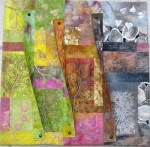
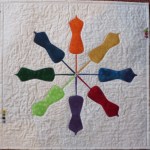
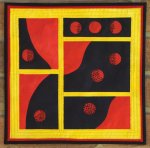
You will find something of interest in all of the quilts, please click on the thumbnail to be redirected to the Artist’s statement about their thought process and techniques used.
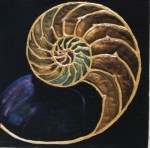







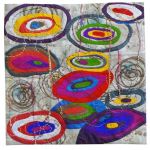
Challenge – Connect
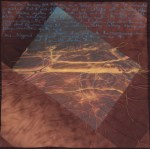
This was a demanding theme as there are so many ways to interpret the word “Connect”. In all the Art Quilts you will find something of interest, please click on the thumbnail to be redirected to the Artist’s statement about their thought process and techniques used.








Featured Artist – Helen Hazon
This month our featured artist is Helen Hazon, I asked Helen a series of questions about herself and her work.


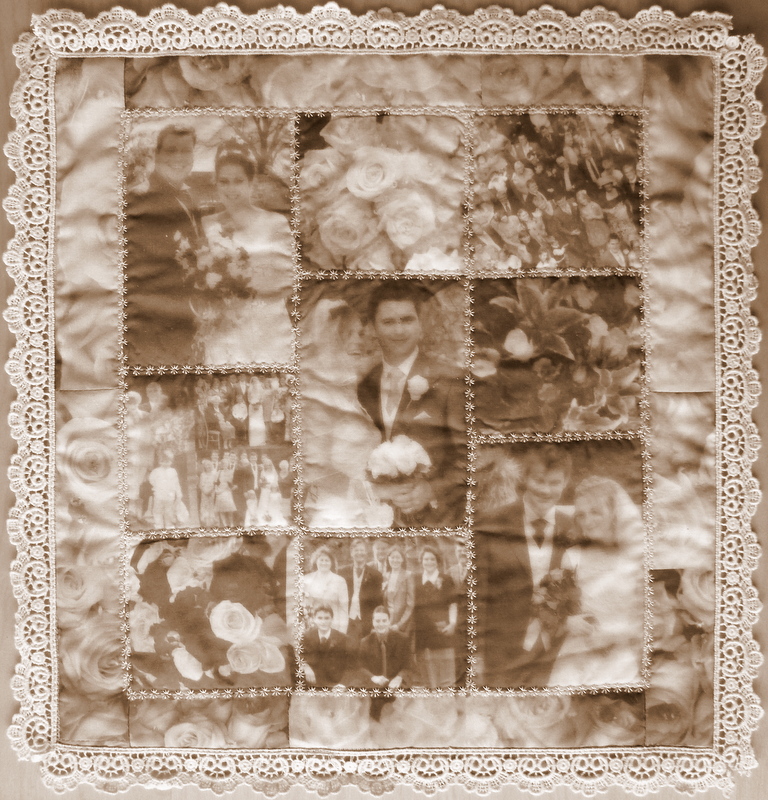
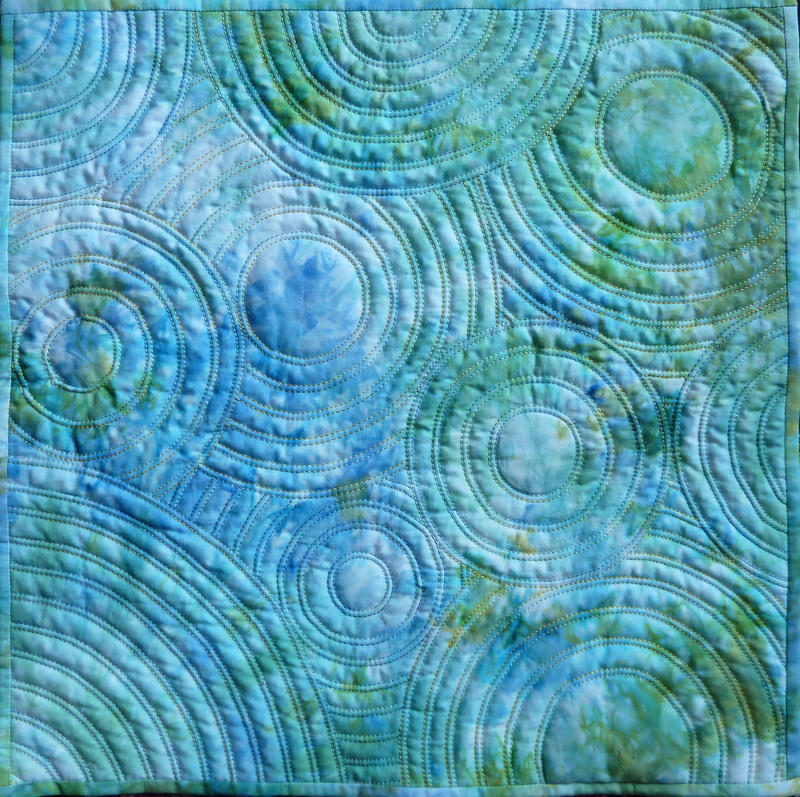
Interview with Helen Hazon.
Question. Helen, like so many of our members we started to sew at an early age, learning different skills and then progressing onto quilt making. What helped or inspired you to make this transition?
Answer. I had begun simple patchwork many years ago (age 18) with English paper pieced hexagons that were very fashionable at that time. I also continued with many other needlework activities and my friends, famly and work colleagues knew about all my sewing, knitting, embroidery etc. Then one day about 20 years ago a friend said that she wanted to learn patchwork and quilting but was nervous about the classes. She asked me f I would go with her. I agreed and that was the start!!
Question. Do you have a favourite quilting magazine?
Answer. No not really. The one that I buy most often (but only occasionally) is British Patchwork and Quilting and I read The Quilter from the British Quilting Guild. I do read others online such as the American ones like Quilt Life and Quilters Newsletter and sometimes magazines like Stitch and Art Quilter.
Question. Who or what inspires you?
Answer. Most of my inspiration comes from Nature – landscapes, flowers, trees, grasses, water, rocks. I use my own photographs a lot and also pictures taken (by me and by others) of the microscopic inner world of plants, rocks etc. I find inspiration too in the members of my family – their characters and their interests. My background in science prompts me too. I like symmetry and regular patterns and I have to work hard when I sometimes want to avoid these in a quilt.
Question. Have you participated in any other workshops/courses other than the City and Guild course, and what would be your favourite and why?
Answer. Over the years I have attended many, many workshops to learn all sorts of skills and techniques. The ones I like best concentrate on sewing – hand and machine. I’m less keen on mixed media, paint etc. My real favourites have been related to detail in both piecing and quilting – precision and intricate stitching – with expert tutors such as Philippa Naylor and Sheena Norquay and Pat Archibald.
Question. What is your favourite technique or tool?
Answer. Favourite tools are my hand sewing needles and my sewing machines. I’m not a great lover of gadgets. Favourite techniques at present are free-motion quilting, machine embroidery and appliqué.
Question. To date your quilt “My Garden” to me is the most complex, could you tell us more about the techniques and fabrics you used.
Answer. “My Garden” developed from a photo of part of my back garden taken from my kitchen window. The fabrics used were almost all scraps of cotton with a few silk pieces. They were all chosen for their colours or textures. The pices were laid onto a piece of wadding (batting) to build up a collage of the general colour blocks in the garden. I covered the entire collage with a piece of soluble stabilizer which I pinned down at regular intervals to hold everything in place. Then, using Maseira rayon threads, I began machine stitching into the collage to create the main structures of the trees, walls and summerhouse. Next I washed the entire piece to remove the stabilizer. Morestitching was added to complete the background and to put in the details and highlights – flowers, leaves and so on. The final touch was to appliqué the little black cat – her name is Shadow and she likes to sit and watch the birds.
Question. What is your favourite colour?
Answer. Blue in all its variations.
Question. Do you use a sketchbook?
Answer. I have notebooks in which a make very rough sketches, do calculations and jot down my ideas for my projects. I use words and numbers more that picture. It’s not my idea of what a sketchbook should be – it’s a system that’s evolved over time and it suits me.
Question What brand of sewing machine do you use, and do you like it?
Answer. My main machine is a 15 year old Bernina which I love. It is a solid workhorse yet allows me to do the more detaild work that I like on smaller projects. I also have a Husquvarna Topaz with an embroidery attachment and a Pfaff Grand Quilter for use on my Little Gracie quilting frame.
Thank Helen, it has been a pleasure.
Challenge – Time
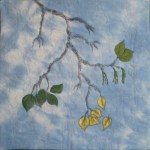
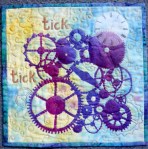
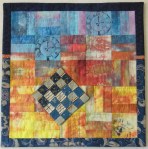
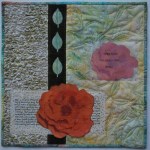
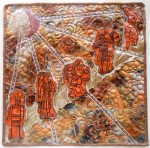
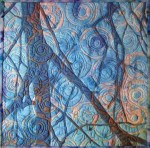
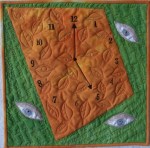
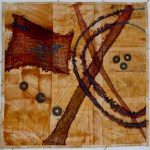
Our Challenge for August/September was “Time” a wonderful opportunity to explore the different ways time can be interpreted into a quilt. The quilts that were created for this challenge show the diversity of inspiration and design. By clicking on the thumbnail you will be directed to the artists page where you can read their statement about their design.





Featured Artist – Diana Vincent
Diana Vincent is a member of FifteenbyFifteen Quilt Group and regularly contributes to the bi-monthly challenges. This week I interview Diana (via Internet) and I hope you enjoy reading more about Diana.
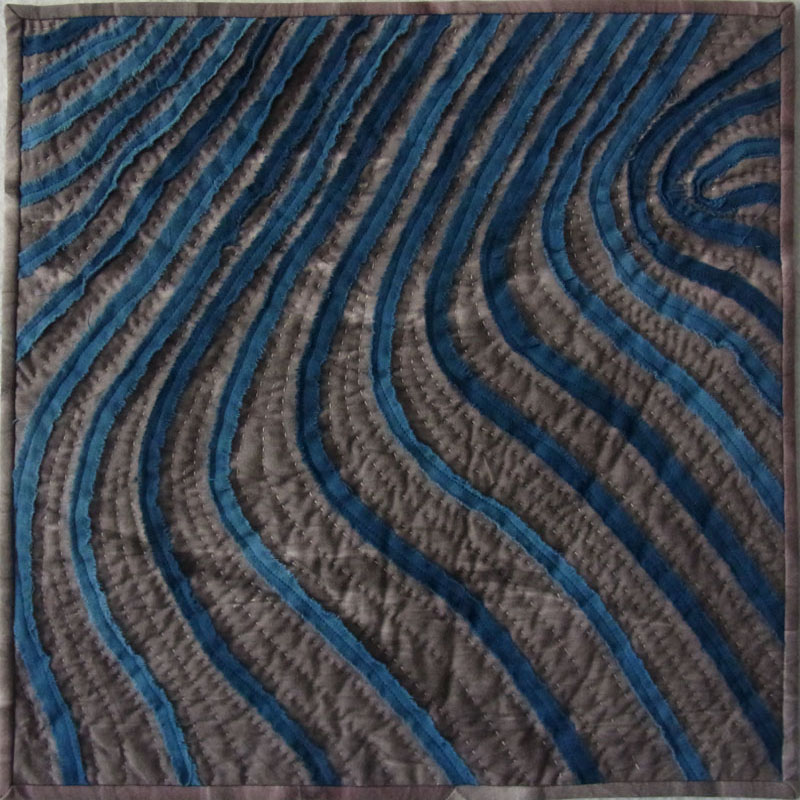
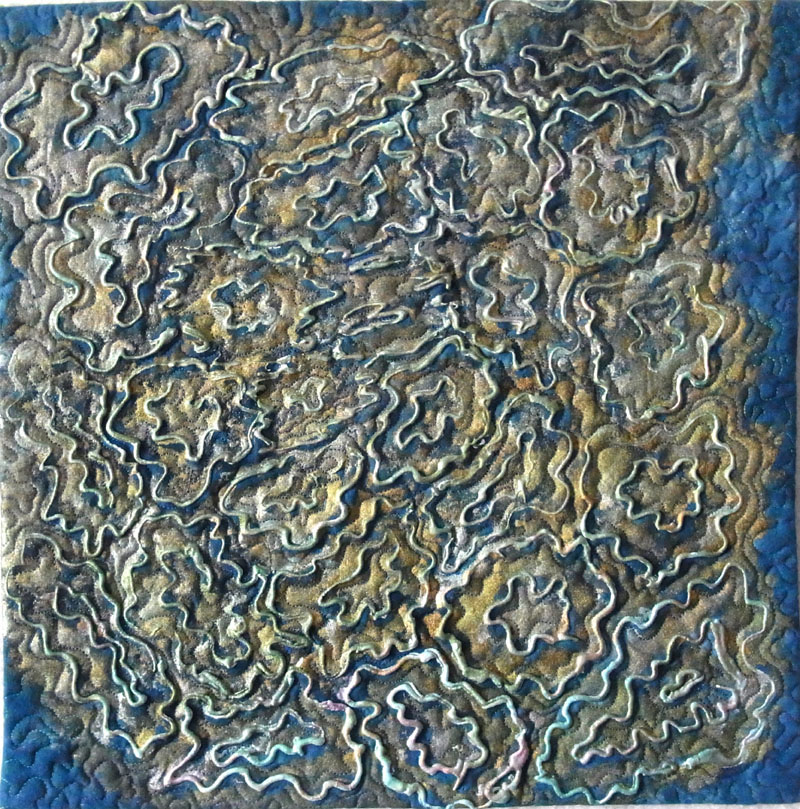


Interview with Diana Vincent.
Question. Diana, you talk about beginning your love of quilting by sewing simple patched quilts for your children, and then progressing to contemporary and then to art quilts. What helped or inspired you to make this transition?
Answer. The resurgence of quilting in the late 70’s began this transition. At that time we were having a new house built and consequently I was reading a lot of home magazines, which were including quilts in their decorating ideas. I was keen to have more than just traditional quilts for my beds and began investigating designing my own for a more contemporary look. Later I started making art quilts to enter into competitions and to hang on my own walls.
Question. Do you have a favourite quilting magazine?
Answer. Two of the originals, Downunder Quilts from Australia and New Zealand Quilter. Both of these I have read almost from their inception. I like these because they have plenty of articles, not just patterns. Quilting Arts I buy occasionally for their techniques.
Question. Who or what inspires you?
Answer. My environment – a walk in the forest or along by the ocean, architecture, some quirky thing I see when I am out. I carry my camera with me most of the time and find most of my inspiration from my pictures.
Question. You mention a workshop that you took with Nancy Crow and how this helped with your work, can you elaborate? And do you take workshops on a regular or casual basis?
Answer. The week with Nancy Crow was a revelation to me. She teaches the freedom from following the rules and the fear of not always pleasing everyone who views your work. I found after this workshop my work was more spontaneous, free flowing backgrounds and strong use of colour emerged. I take very few workshops. The ones I do take are generally week long and usually involve a technique I want to learn.
Question. As a teacher with accreditation with the Western Australian Quilters Association, do you teach regularly or on a casual basis?
Answer. Now in my seventies, I have given up teaching large workshops. I do still teach small workshops, mainly in my own home, generally for a group of five or six.
Question. What is your favourite technique or tool?
Answer. I love machine quilting and have invested a lot of time into getting it right. I also enjoy dyeing and the wonderful results you get.
Question. I have noticed in your quilts the use of the colour blue; is this your favourite colour?
Answer. I do like blue, but this is just coincidental in the 15×15 quilts. I am a great lover of colour and most of my bed quilts are bright. Art quilts, of course have to be what your source inspiration suggest, unless you are going for an Andy Warhol effect.
Question. Do you use a sketchbook?
Answer. Yes, I do. I am not a great artist and they are not a thing of beauty, but I find it very useful to put down my ideas and work them through.
Question What brand of sewing machine do you use, and do you like it?
Answer. I have an industrial flatbed Mitsubishi that I do all my straight sewing on. A thirty year old Pfaff that I still find very useful for doing finer work on such as pin tucking and fine hemming. I also have a Pfaff quilt expressions 4 that I bought expressly for machine quilting as it has a wider throat and more room to get a large quilt through. I find all of these machines excellent.
Thank you Diana, it has been a pleasure.
Interviewed by Kaylene Maalste
Challenge – Texture
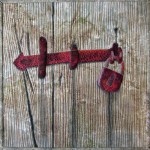
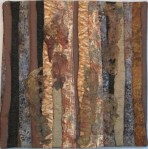
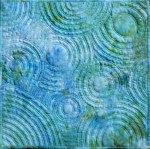
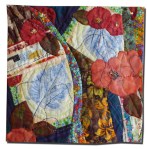
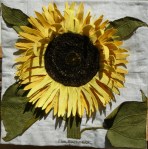
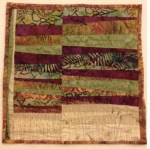
Our Challenge for June/July was “Texture” a wonderful opportunity to explore the different ways texture can be incorporated into a quilt.
The following is a definition of texture when it refers to fine arts from Dictionary.com
- “the characteristic visual and tactile quality of the surface of a work of art resulting from the way in which the materials are used.”
- the imitation of the tactile quality of represented objects.
The quilts that were created for this challenge show the diversity of inspiration and design. By clicking on the thumbnail you will be directed to the artists page where you can read their statement about their design.





Challenge for June/July
Our next challenge is “Texture”.This is a great opportunity to explore texture from many perspectives. Our sense of touch is sensitive to the feel of surfaces…wood can be smooth or rough…rocks and many other elements will give us the same sensation.
The following is a definition of texture when it refers to fine arts from Dictionary.com
- “the characteristic visual and tactile quality of the surface of a work of art resulting from the way in which the materials are used.”
- the imitation of the tactile quality of represented objects.


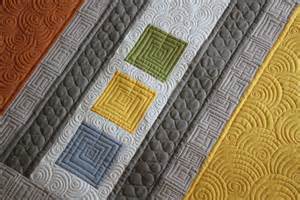
No matter the interpretation, the quilts that will be revealed at the end of July will be exciting to see and interpret.
Challenge – Garden
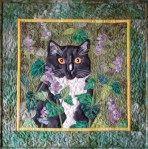
Our Challenge for April/May was “Garden” a wonderful theme for those in the Northern Hemisphere enjoying Spring. For others – an Autumn garden means sweeping up leaves and pulling weeds. As you can see we have cheerful and vibrant quilts celebrating our gardens. The background theme of the gardens vary from views into our own gardens, the concept of window gardens, gardens in the city, nostalgia for Grandma’s garden, a garden that welcomes, gardens in the present and past. There is a story about Meeko, the cat which you can read about by clicking on the thumbnail and be directed to Chris’s page. Congratulations.
By clicking on the thumbnail you will be directed to the artists page where you can read their statement about their design.





 FIFTEEN BY FIFTEEN